
The Incit teams
Team 1
Modulation of immune and inflammatory responses
CNRS EMR 6001
Objectives of the research programs
Our team is interested in understanding the development and modulation of immune responses by the gut microbiota in various inflammatory contexts , such as chronic inflammatory bowel diseases and gastrointestinal GvHD. Our project aims in particular to use regulatory immune responses as new targets for the development of original immunotherapy protocols applied to pathologies associated with severe inflammatory events.
Research projects
Our translational research in immuno-oncology and the microbiome aims to understand how gut dysbiosis disrupts inflammatory responses and immune surveillance against infections, and how the microbiome can be harnessed to prevent chronic inflammatory bowel diseases (IBD) and colorectal cancer, or to improve the efficacy of cancer immunotherapies. Our program is structured around three main areas of focus:
- Characterizing alterations in bidirectional communication between the gut microbiota and the mucosal immune system, which can act as a true regulator, determining disease progression and treatment efficacy. To study these interactions, we combine preclinical models of infection, inflammation, and cancer with various approaches in microbiology and immunology. (Research area coordinated by M. Chamaillard and F. Altare).
- the development of synthetic immunomodulators to control inflammatory responses, partly via the modulation of DP8α Tregs (axis led by B. Pitard).
- The development of targeting tools (e.g., affitines) to redirect immune responses (led by F. Pecorari, https://intercept.cnrs.fr/)
Graphic summary

Highlights
De Seilhac et al.Identificationof human DP8α regulatory T cell subpopulations that react to health-associated anti-inflammatory gut commensals. Gut Microbes, 2026.
Godefroy, E., and Altare, F.“Deciphering and harnessing gut microbiota–associated immune regulation in acute graft-versus-host disease.” Review. Curr Opin Immunol. 2025
Godefroy et al. Human gut microbiota-reactive DP8a regulatory T cells prevent acute graft-versus-host disease in a CD73-dependent manner. JCI Insight, 2024.
Paz del Socorro et al., The biotherapeutic Clostridium butyricum MIYAIRI 588 strain enhances the enterotropism of Rorγt+ Tregs and the efficacy of PD-1 blockade. Gut Microbes. 2024.
de Oliveira Alves et al., "The colibactin-producing Escherichia coli alters the tumor microenvironment to induce immunosuppressive lipid overload, thereby facilitating colorectal cancer progression and chemoresistance." Gut Microbes 2024.

Themes addressed
Study of the role of bacteria associated with IBD and tumors in regulating intestinal homeostasis and immune surveillance against infections and tumorigenesis, including at sites distant from the intestine
Coordinated by M. Chamaillard, F. Altare,
Development of nucleic acid vaccination vectors and use of these vectors as tools to modulate inflammation.
Coordinated by B. Pitard
Development of Affitins for the targeting of molecules of diagnostic or therapeutic interest.
Coordinated by F. Pecorari
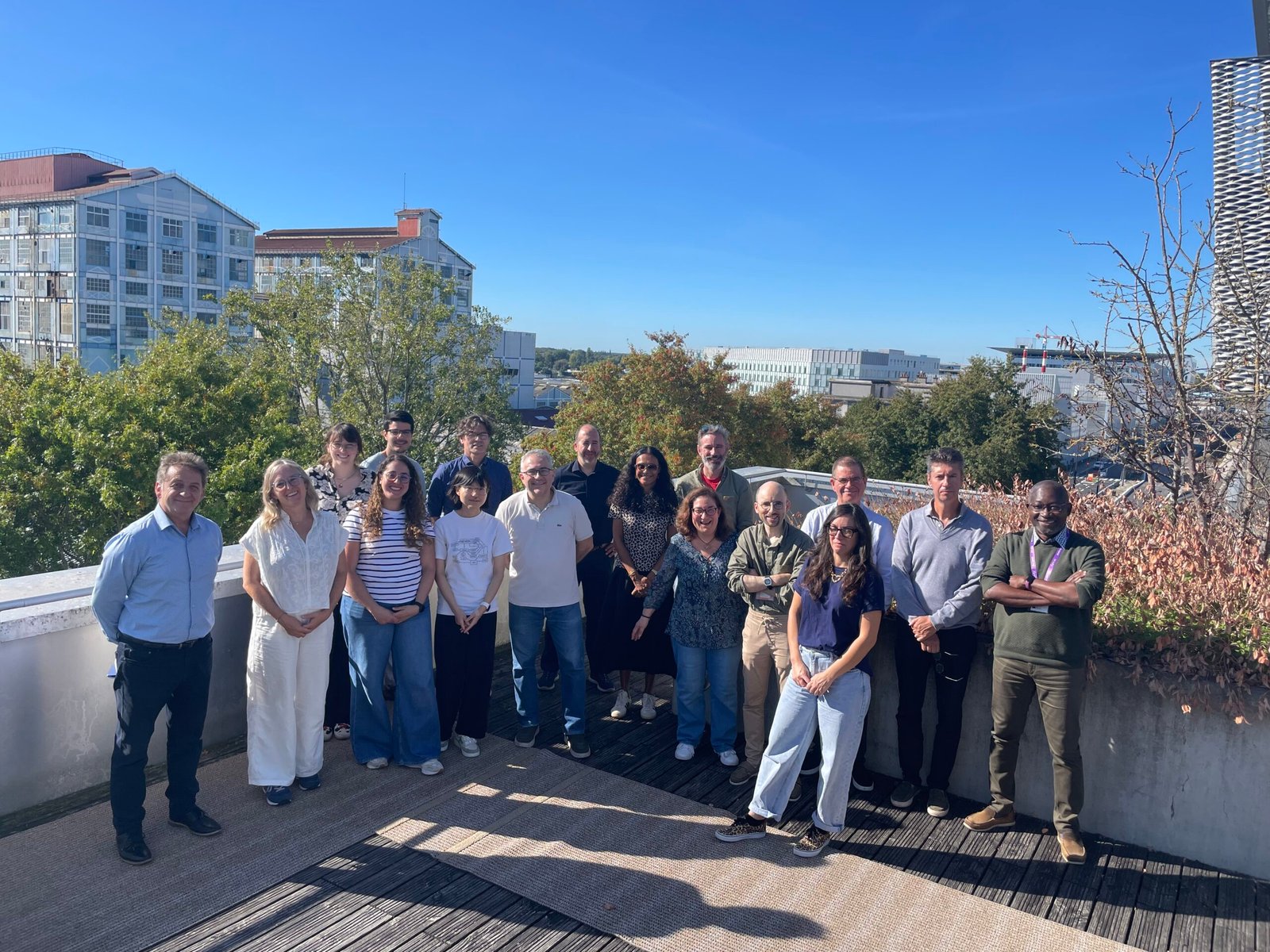
The team
Team Leaders
8 researchers
- F. Altare, DR Inserm
- B. Pitard, DR CNRS
- F. Pecorari, CR CNRS
- Mr. Chamaillard, Director of Research at Inserm
- F. Housseau, Director of Research, Inserm
- L. Poulin, CNRS Research Director
- L. Chauveau, CNRS Research Fellow
- B. Moratou, Assistant Professor, University of Nantes
5 PhD students
- Leonardo Mandu Goncalvez
- Mohamed-Yassine Sleimi
- Wenhui Zhang
- Larissa De Cassia Basilio
- Maëlys Laville
5 ITA
- A. Breiman, IR CHU
- P. Cossard, IE Inserm
- E. Ekaza, IR Inserm
- J. Rocher, TCS Univ
- C. Vignes, IR Inserm
3 postdocs
- A. Patinec
- C. Terciolo
- R. Leau
Scientific publications
Find the major publications of the team in recent years.
DP8α regulatory T cell subpopulations that react to health-associated anti-inflammatory gut commensals
De Seilhac M et al.
Gut Microbes, 2026
Deciphering and harnessing gut microbiota-associated immune regulation in acute graft-versus-host disease.
Godefroy E, Altare F.
Current Opinion in Immunology. 2025
Human gut microbiota-reactive DP8a regulatory T cells prevent acute graft-versus-host disease in a CD73-dependent manner.
Godefroy E., Chevallier P., Haspot F., Vignes C., Daguin V., Lambot S., Verdon M., De Seilhac M., Letailleur V., Jarry A., Pédron A., Guillaume T., Peterlin P., Garnier A., Vibet M.-A., Mougon M., Bourgeois A., Jullien M., Jotereau F., Altare F.
JCI Insight 2024
The biotherapeutic Clostridium butyricum MIYAIRI 588 strain enhances the enterotropism of Rorγt+ Tregs and the efficacy of PD-1 blockade.
Paz del Socorro T, Oka K, Boulard O, Takahashi M, Poulin LF, Hayashi A, Chamaillard M. Gut Microbes. 2024.
Colibactin-producing Escherichia coli alters the tumor microenvironment by inducing an immunosuppressive lipid overload, thereby facilitating the progression of colorectal cancer and chemoresistance.
de Oliveira Alves N, Dalmasso G, Nikitina D, Vaysse A, Ruez R, Ledoux L, Pedron T, Bergsten E, Boulard O, Autier L, Allam S, Motreff L, Sauvanet P, Letourneur D, Kashyap P, Gagnière J, Pezet D, Godfraind C, Salzet M, Lemichez E, Bonnet M, Najjar I, Malabat C, Monot M, Mestivier D, Barnich N, Yadav P, Fournier I, Kennedy S, Mettouchi A, Bonnet R, Sobhani I, Chamaillard M.
Gut Microbes. 2024
Human CD4+/CD8α+ regulatory T cells induced by Faecalibacterium prausnitzii protect against intestinal inflammation.
Touch S., Godefroy E., Rolhion N., Danne C., Oeuvray C., Straube M., Galbert C., Brot L., Alonso Salgueiro I., Chadi S., Ledent T., Chatel J.-M., Langella P., Jotereau F., Altare F., Sokol H.
JCI Insight, 2022
Contact
Contact
Frédéric ALTARE
frederic.altare@inserm.fr
Website
Nantes
Location
Health Research Institute of the University of Nantes - IRS 2
22 Boulevard Benoni Goullin, 44200 Nantes
About us
Created in 2022, the INCIT(Immunology and New Concepts in Immunotherapy) research unit, directed by Frédéric Altare, is based on the desire to focus thescientific expertise of the immunology and immunotherapy teams on different pathological contexts: inflammation, cancer and infectious diseases.